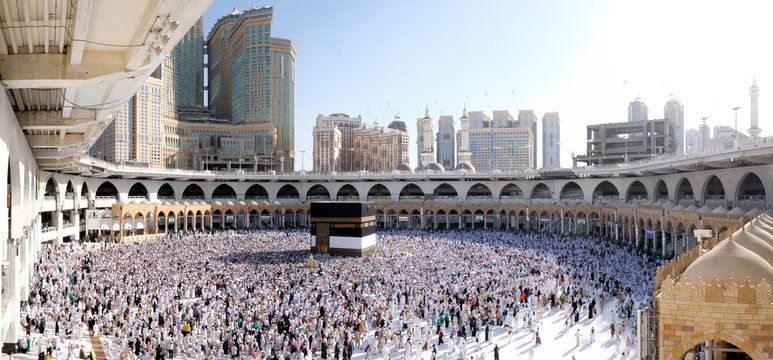
As millions of Muslims from across the globe gather for the sacred pilgrimage of Hajj and prepare for the celebration of Eid-ul Adha, Moustafa Salama, Accounts Payable Associate and Multi-faith Network Member, reflects on Eid celebrations and the Hajj pilgrimage as part of the Muslim faith calendar.
For Muslims, the first ten days of the final month of the Islamic calendar (Dhul Hijjah) are especially sacred, with Muslims in their millions from all corners of the globe making the pilgrimage to the holy site of Makkah during the Hajj season.
As a devout Muslim who has yet to make the pilgrimage (it is obligatory once in a lifetime for Muslims who are physically and financially able), these days to me are emblematic of firm, unshakeable faith. The sheer willpower and unrelenting belief that drives millions from around the globe to pause all material worldly activities in favour of answering the call of Allah to Hajj; scorching heat, countless miles travelled on foot, and far from luxurious abodes – a reminder that there is more to life than the material aspect.
Hajj
Hajj is the 5th pillar of the Islamic faith, commemorating the monotheistic legacy of the Prophet Ibrahim (Abraham), whom Allah tested by commanding him to sacrifice his son, traditionally understood by Muslims to be Ismail (Ishmael). Upon Ibrahim’s willingness to obey the command, Allah honours his obedience and ransoms his son with a ram from Heaven. Ibrahim is then commanded to build the Kaaba and call the people to pilgrimage.
Eid
Eid-ul Adha begins during the culmination of Hajj, on the 10th day of Dhul Hijjah. It is a celebration where Muslims worldwide sacrifice livestock and distribute the meat to the poor and needy. The coming together of families, the sharing of food and the praising of Allah are central to the concept of Eid. The social etiquette of checking on your neighbour and making sure the entire community is looked after is a core teaching of Islam, and this encapsulates it in the best way.
In a world facing growing economic pressure, rising living costs and increasing individualism, Islam emphasises the importance of balancing devotion to God with responsibility towards family, neighbours and the wider community.
It teaches that collective strength can help individuals navigate hardship, and that a society’s wellbeing is closely tied to how its people care for one another. By checking in on neighbours, supporting those in need and sharing both challenges and blessings, communities can become stronger, more compassionate and more resilient for everyone.